Natural Disaster Incident Response Playbook
Category: Emergency Management & Incident Response
Difficulty: Intermediate
Tools Used: Microsoft Word, Organizational Mapping Tools, Evacuation Route Planning Software, Version Control (v0.2)
Brief Description:
The Natural Disaster Incident Response Playbook (also known as “The Green Book”) is a comprehensive emergency preparedness guide collaboratively developed with classmates. It standardizes how an organization should respond to natural disasters such as fires and earthquakes, defining employee roles, evacuation procedures, communication protocols, and training schedules to ensure safety and reduce chaos during critical incidents.
Extended Explanation:
This collaborative project focused on creating a structured, actionable playbook that organizations can follow during natural disasters. Our team divided the document into key sections covering fire safety response, employee training, and post-incident recovery procedures.
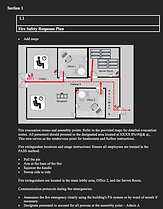
The Fire Safety Response Plan outlines clear evacuation routes, extinguisher locations, and communication protocols. Employees are trained to follow the PASS method (Pull, Aim, Squeeze, Sweep) for extinguisher use, while assigned roles such as Evacuation Coordinator, Route Guide, and Safety Officer manage safe exits and communication with emergency services.
In addition, the playbook includes an Employee Training Section that defines how and when staff should complete various emergency exercises. Training types include semi-annual fire evacuation drills, annual PASS extinguisher simulations, and contingency-based evacuation practice for non-standard exits. Documentation of attendance, acknowledgments, and post-incident reports are also required to maintain accountability and regulatory compliance.
Each update (like Version 0.2) integrates improvements from prior versions—adding new floor plans, enhanced evacuation maps, and feedback-based refinements. This approach mirrors the continuous improvement cycle seen in professional incident response programs.
Working as a team strengthened our understanding of organizational preparedness, incident coordination, and documentation discipline—skills crucial for both cybersecurity and physical incident management environments.
Images:
Key Stats:
-
Project Type: Collaborative Emergency Response Guide
-
Version: 0.2 (“Green Book”)
-
Contributors: Emily Lovo & classmates
-
Focus Areas: Fire recovery, training procedures, communication hierarchy, documentation standards
-
Completion Date: April 2024
-
Location: 404 Book Not Found HQ, Phoenix, AZ
Key Takeaways:
-
Structured, role-based response plans prevent confusion during emergencies.
-
Regular employee training improves safety readiness and procedural consistency.
-
Documentation (checklists, logs, and incident forms) ensures accountability and compliance.
-
Version control enables continuous improvement and transparency across safety updates.
-
Collaborative planning mirrors real-world emergency coordination and teamwork.